Nos partenaires

Le projet consacré au Bréviaire de Grammont résulte d’une collaboration entre l’abbaye de Maredsous, la KU Leuven et l’Institut royal du Patrimoine artistique (IRPA). Ce projet a bénéficié du soutien du Fonds Baillet Latour et de la Fondation Roi Baudouin.

Fondée en 1872 dans la vallée de la Molignée par des moines bénédictins, l’Abbaye de Maredsous est caractéristique d’un style architectural néo-gothique qui s’harmonise parfaitement avec la nature boisée et vallonnée de la région. Empreints de spiritualité, les bâtiments de l’abbaye de Maredsous dégagent une sensation de plénitude et d’absolu à laquelle on ne peut rester indifférent.  L’église qui domine le cloître, le monastère et la bibliothèque, les diverses dépendances dont l’ancienne école des métiers d’art, le Centre d’accueil Saint-Joseph, constituent un ensemble harmonieux qui invite le visiteur à la promenade et à la méditation.

KU Leuven will celebrate its 600th anniversary in 2025, making it one of Europe’s oldest universities. Our institution has the double honour of being the oldest university in the Low Countries and the oldest extant Catholic university in the world. The University that is now known as KU Leuven was founded with the papal bull ‘Sapientiae immarcessibilis’. This was issued by Pope Martin V on 9 December 1425 after the city of Leuven had requested permission for the foundation of the University with the support of John IV, Duke of Brabant, and the city’s clergy. Today, KU Leuven accommodates 50,000 students, spread across the various campuses in Leuven and elsewhere in Flanders. For research, KU Leuven ranks among the world’s finest. KU Leuven has become a cosmopolitan institution in a rapidly changing urban environment. Its unique profile reconciles cutting-edge science with quality of life and openness to talent.


The Faculty of Theology and Religious Studies is responsible, within the Catholic University of Leuven, for the development and coordination of academic formation, research, and scientific service in the field of theology and religious studies. The Faculty contains five Research Units: Biblical Studies, Systematic Theology and the Study of Religions, Theological and Comparative Ethics, History of Church and Theology, and Pastoral and Empirical Theology. These Research Units have been entrusted with the teaching of theology and religious studies in the Faculty programmes, with research, with the formation of research personnel, and with social and ecclesiastical services related to each discipline.

L’Institut royal du Patrimoine artistique (IRPA) est une institution fédérale sans but lucratif qui prend soin du patrimoine belge : les œuvres d’art, monuments et objets emblématiques de notre passé. Ces magnifiques et irremplaçables réalisations incarnent notre histoire commune et façonnent notre identité au sein de la société. C’est pourquoi, à l’IRPA, nous sommes convaincus que l’art est l’émotion qui nous unit. Afin de préserver durablement notre patrimoine et d’en révéler tout le sens et la beauté, l’IRPA vise l’excellence en matière de recherche et de conservation-restauration. Dans un esprit de responsabilité commune et de développement durable, ce n’est qu’en accordant au patrimoine tout le soin qu’il mérite que les nombreuses générations suivantes pourront, à leur tour, en profiter. Il est de notre devoir de transmettre soigneusement ce précieux présent du passé à nos enfants et petits-enfants. Depuis 1948, la synergie interdisciplinaire est le fondement inébranlable pour tous nos experts dévoués, qui nourrissent une véritable passion pour le patrimoine et la science. Grâce à un large éventail d’expertises diverses et de technologies de pointe, nous œuvrons ensemble pour étudier le patrimoine sous tous ses aspects, le préserver et le restaurer dans un état optimal grâce à la conservation préventive et des traitements de conservation-restauration. En outre, l’IRPA veille à diffuser largement ses connaissances sur le patrimoine artistique et les technologies de recherche et de conservation-restauration. Le patrimoine est l’affaire de tous. C’est ce message fédérateur que nous voulons transmettre.

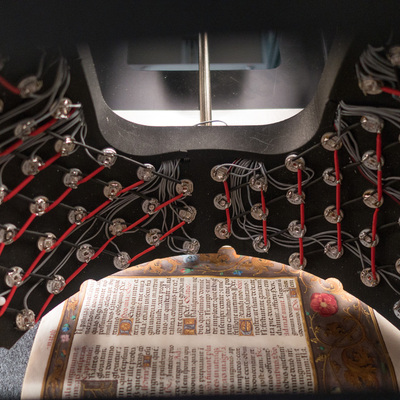
The Book Heritage Lab KU Leuven, is an innovative expertise lab of KU Leuven for research and conservation of manuscripts, early printed books and documentary heritage. The Book Heritage Lab focuses on diagnosis and research of the material history of medieval and early modern paper and parchment artefacts, with a special focus on book archeology, production, preservation, scientific imaging and conservation. In the lab between 2018 and 2020 the charters of the Old University were studied and conserved. The Book Heritage Lab is located in the Maurits Sabbe Library of the Faculty of Theology and Religious studies and is founder of VIEW - KU Leuven Core Facility of Heritage Science & Digitisation Technologies.

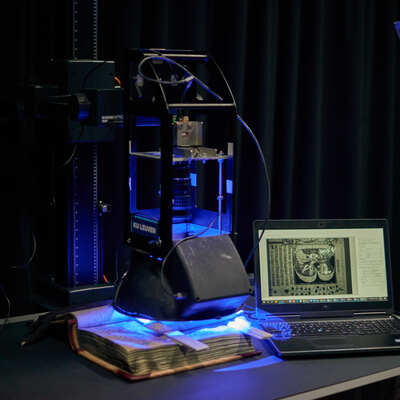
VIEW KU Leuven Core Facility for Heritage Science and Digitisation Technologies represents a collaboration between the Book Heritage Lab (Faculty of Theology and Religious Studies) and the Imaging Lab (KU Leuven Libraries). Through this collaboration, scholars will obtain access to the infrastructure and expertise of both Labs, and be supported in innovative and interdisciplinary research on heritage materials both in physical and digital form.

The Imaging Lab is part of KU Leuven Libraries, and is optimally equipped for the digitization of fragile and precious (mainly documentary) heritage materials, with a special focus on high quality. Its room is climate-controlled and secured, ensuring a safe digitisation environment, and its equipment state-of-the-art. This allows for an optimal constellation of infrastructure for imaging, suited to the nature and physical state of the original objects. The Imaging Lab is co-founder of VIEW - KU Leuven Core Facility of Heritage Science & Digitisation Technologies.

llluminare (KU Leuven) is a research and documentation centre, located in the Leuven University Library. The focus on medieval and early modern art from the Low Countries in a European perspective is facilitated by both research and doctoral projects that are supported by an international network of universities, institutions, and museums. Illuminare conserves and catalogues illuminated manuscripts and carries out art technical research. It examines, through an interdisciplinary approach, the iconology of medieval art. It holds several research archives of renowned art historians, and organises national and international exhibitions.

LIBIS originated in 1973 as a support service for the KU Leuven libraries. The past decennia, it has grown from its university framework into an important player in the field of information solutions. Today, several institutions centered on the transfer of knowledge, have found a suitable partner in LIBIS for the sustainable management and improvement of accessibility of their collections. LIBIS partners with scientific, private and public organisations: whether it be libraries, archives, museums or cultural organisations, their goal is to develop modern and user-friendly solutions for the management of their collections.

Belgium can boast a remarkable wealth of heritage in terms of museums and buildings. To help preserve that heritage, the Baillet Latour Fund decided in 2000 to finance the restoration of buildings and works of art with a special historic, artistic and cultural significance. In partnership with the King Baudouin Foundation, which has placed its heritage expertise at the Fund’s disposal, an annual selection is made of projects to which the Fund will be lending its support so that the masterpieces in these projects can continue to attest to the excellence of human endeavour underpinning them. This programme was initiated in 2002. Since then, the Fund has collaborated on more than eighty important projects, including the restoration of the Bible of Anjou, the restoration of the Rubens paintings held at the Royal Museums of Fine Arts of Belgium, the Lambert Lombard series The Virtuous Women and The Seven Sacraments by Rogier van der Weyden.

La Fondation Roi Baudouin a pour mission de contribuer à une société meilleure, en Belgique, en Europe et ailleurs dans le monde. La Fondation est un acteur de changement et d’innovation au service de l’intérêt général et de la cohésion sociale. Nous cherchons à maximiser notre impact en renforçant les capacités des organisations et des personnes qui contribuent à l’avènement d’une société meilleure. Nous encourageons une philanthropie efficace des particuliers et des entreprises en Belgique, en Europe et dans le monde. Nos programmes s’inscrivent dans la durée et couvrent des domaines divers : justice sociale et pauvreté, santé, patrimoine et culture, engagement sociétal, international, éducation et développement des talents, Europe, climat, environnement et biodiversité.